
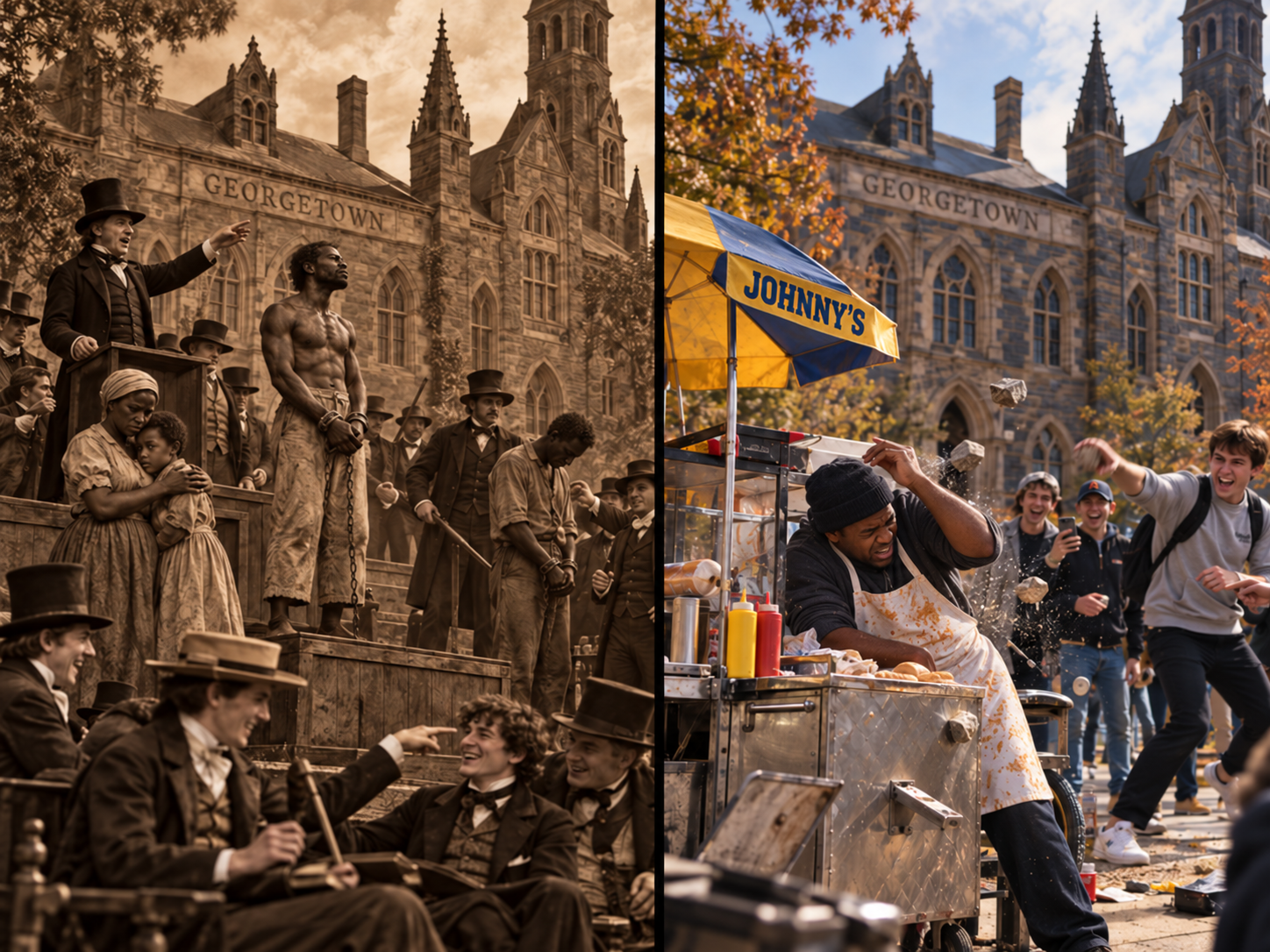
Georgetown law has a bad history with hardworking black Americans.
Most powerful law school in America takes black sole proprietor to court for a class project over what they allege is a $250 discrepancy (that never was brought up as being at issue, instead sneakily waiting to let statutory damages pile up and find dozens of other ways to apply pressure to force a quick and dirty settlement). They spend $400,000+ to demand a $30,000 settlement by lying and bending vaguely written laws that local politicians don’t even understand, let alone small solo operators, to push out black DC. Wasting their own resources, the courts time, and closing my small business because of the Law Clinic’s ego. ““Ran by Sameera Mangena, who lets the rich students go unsupervised and run amok with no consideration for human collateral or any respect for the court. Why would I work 16 hours a day for years to help every worker make as much as they can and not pay myself, then come after me to shake my tiny business down for a class project. Workers made $34 on average. Which was $34 more an hour than I made. Instead of taking on causes or endeavors to actually help people who need in in our community, they are having fun running a nasty, sloppy, traumatic and humiliating campaign by lying, changing the complaints over and over again, colluding, creating fake accounts on social media to embarrass me (using my grandfathers photo), literally stalking my family, and acting truly rude and unprofessional, because a young black solo owner dared to fight back. Abusing the court system because their ego is bruised is insanity. These clinics and local government are backed by big lobbyists. They have their agenda and “activist” reasons and anyone who fall through he cracks or gets ran over is just “collateral damage”. Classic DC I suppose. But this is why Chocolate City is no longer. And you know what the biggest slight and racial indignity I’ve had to endure through all of this, it’s Georgetown’s stance that I, ( the sole owner, creator, all role working 24 hours a day for 4 years) AM NOT ACTUALLY THE OWNER!!! That Johnny’s must have been someone else’s idea and actually ran by someone else day to day all along. They are doing this to make myself look like a big restaurant group or something and therefore easier to justify the horrors and abuse directed towards me and my business in the name of their class project to extort money. YOU CANT MAKE THIS STUFF UP. I supposed that’s a backhanded compliment. But its definitely super racist . Help me fight!
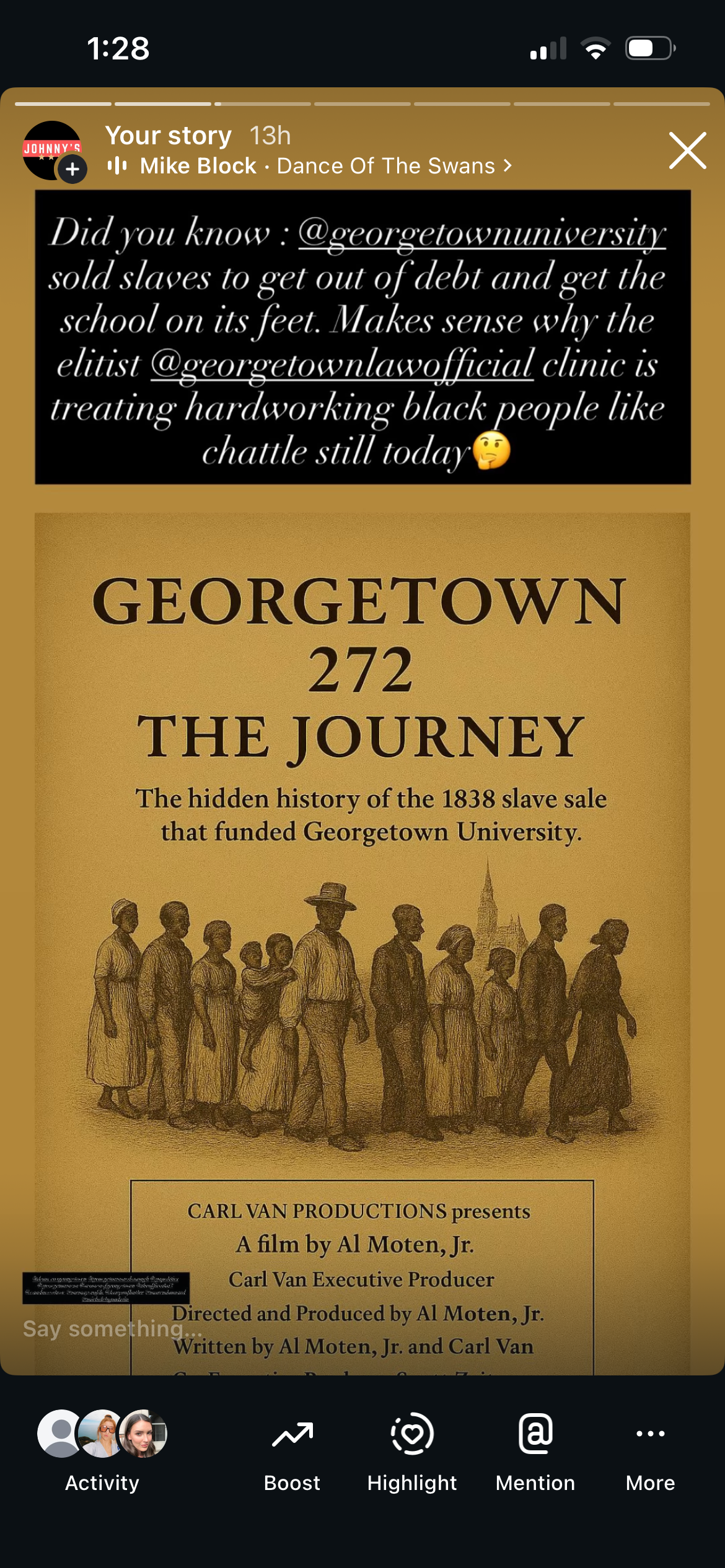
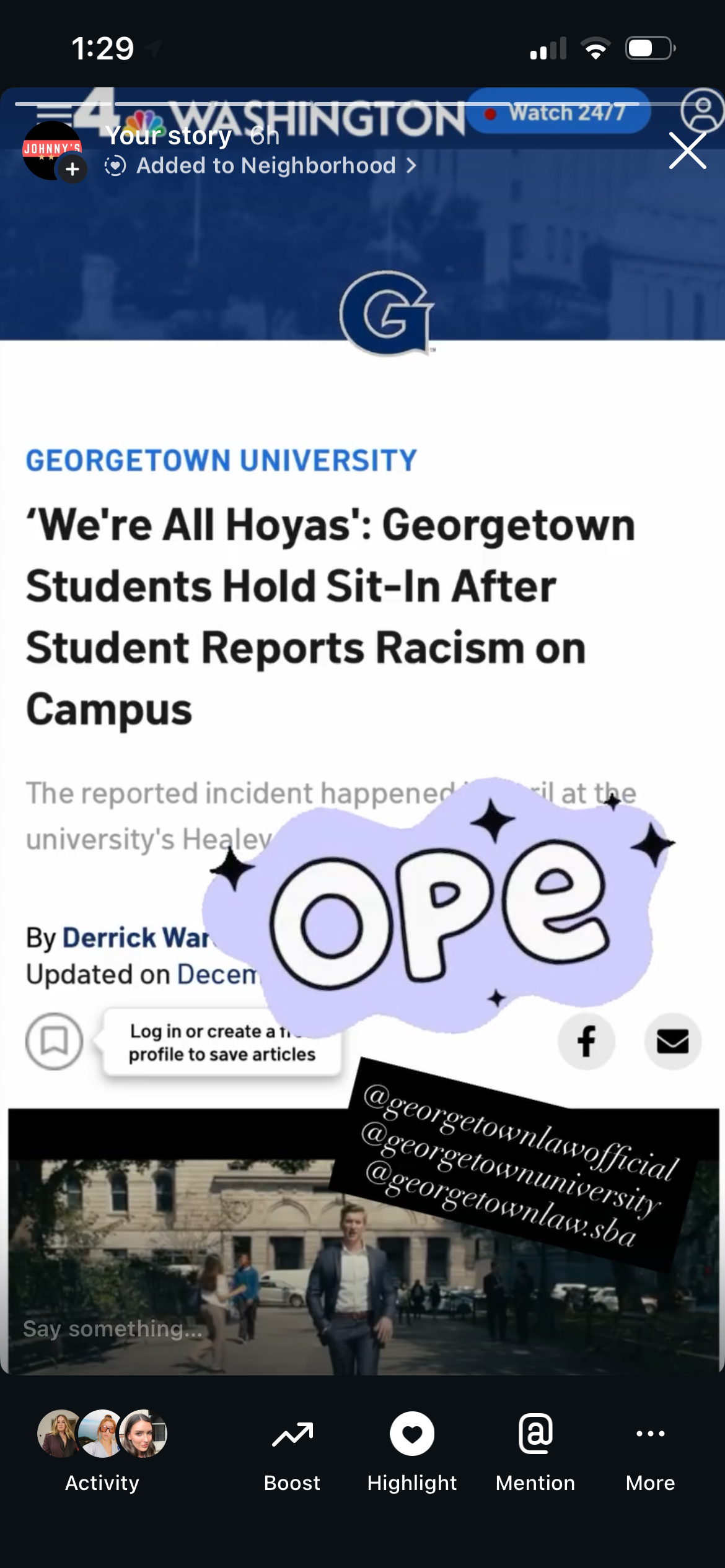
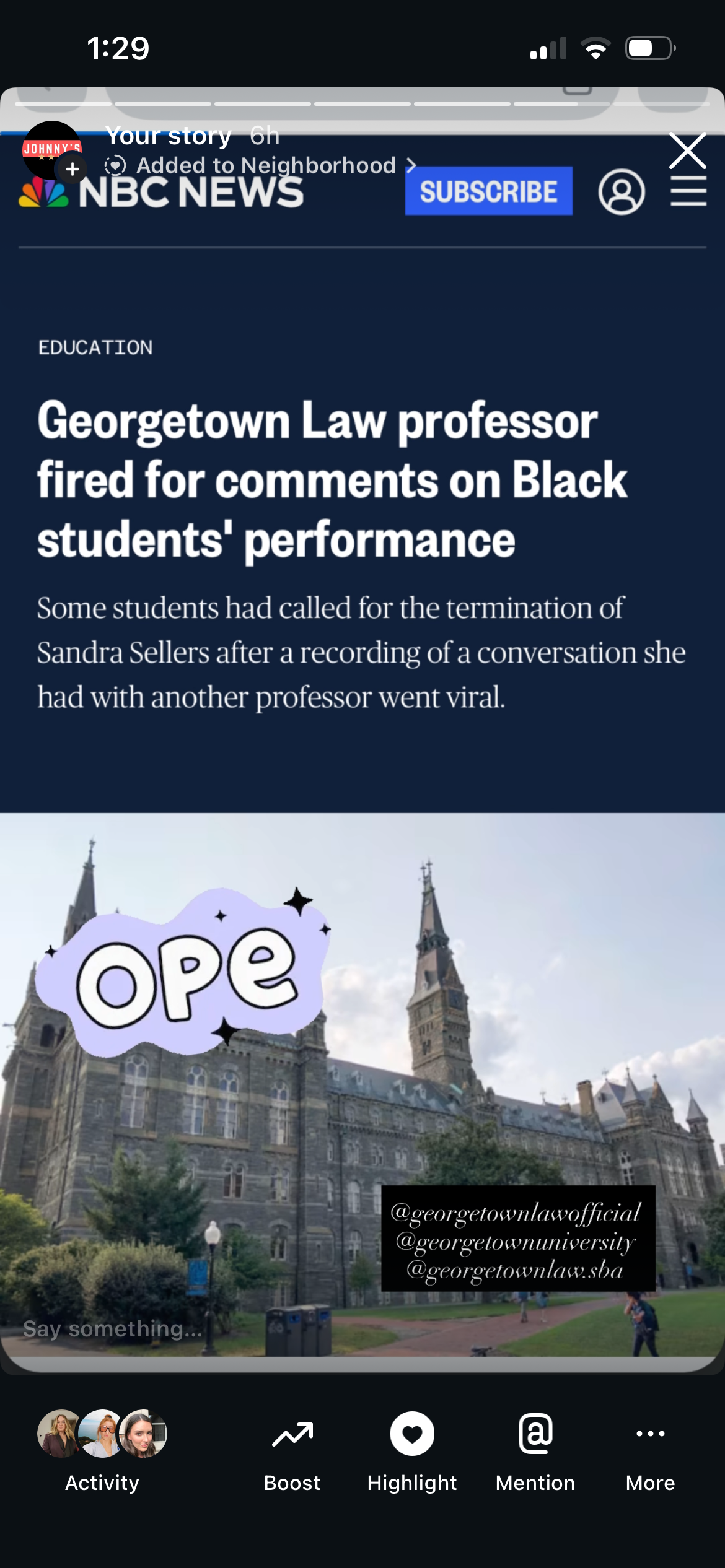
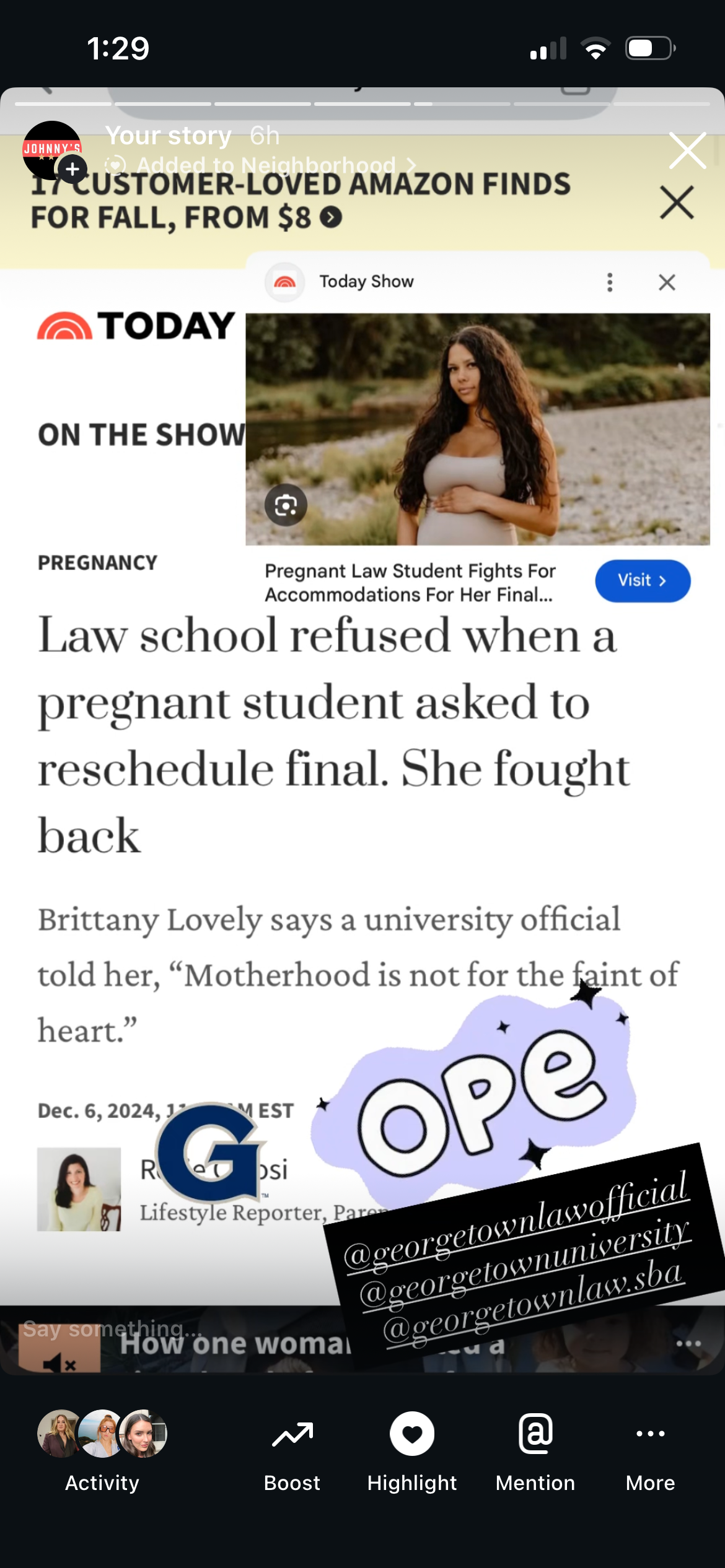
DID YOU KNOW GEORGETOWN UNIVERSITY HAS A SORDID AND RACIST DNA? from 1838 to today. Learn how they worked together to destroy Black DC.
The American Dream Has a Price. And Some Institutions Have Made a Business of Collecting It.
Did you know that in Washington, D.C., a hardworking Black man can spend his entire life building something from nothing, only to find himself fighting for his survival against one of the wealthiest and most powerful academic institutions in America? Did you know Georgetown was funded by selling slaves?
Imagine eager, affluent young students willing to boldly lie, bend the law to their advantage, and pursue classroom credit while using my life, my livelihood, and my family's future as collateral. A team of around 40 people so far (I've lost count honestly) have spent every waking moment finding new ways to hang me. I fight back, they slither and sleuth and find something else to lie about just because they are upset that a black midwestern guy is fighting back against their evil. It invigorates them. They rally behind each other foaming out the mouth like a pack of hungry hyenas. It’s actually quite gross and unsettling to watch, if you have a soul. Let alone if you are the victim. They try to silence me with more threats, more filings, more rage. It feels like they are basically saying “shut up boy!” “Just take it!”. Unfortunately for them, I’m from North East Ohio, and we have it the hard way, and we don’t take shit from nobody. And certainly no trust fund kids that ain’t never worked a real job a day in their lives or risked anything for anyone. Lead by Sameera Mangena, a person who has already made it crystal clear that she wants this to be her crowning work to put her on the map. The sick irony is I’m the one who could use that level of obsession and advocacy. Using my life, my livelihood, my health, my future, and my family to validate this brand new law clinic she seems very unqualified to run. What are we teaching this next generation of young people. What are we teaching this next generation of lawyers. Faux activism without consideration of human collateral damage isn’t just uncivil, its in inhumane.
Another unknown issue I’ve run into is that pro-bono services are non-existent in DC for soloprenuers. There are 30min sessions and workshops for very very basic things like how to get a basic business license. But nothing for “get extortion insurance as the biggest institutions in the world may stalk your family and bury you for years in a class project to feel important”. I also have over the years reached out to my city councilperson Brianne Nadeau (NaDont) for clarity on what exactly the complex city codes are and if city council even understood what they meant. Especially since they are changing every day with prop 82, and politics making solo business owner’s operation literally a hellscape for anyone that didn’t have massive HR departments or payroll departments. It all now is beginning to seem like intentional land minds set up to fatten city coffers. This might also be why the Mayor has ignored me for years asking for clarity o the crazy complicated laws they write. They pile more laws on top of more on top of more. Then sometimes our industry gets tired of being pushed around and making it impossible to operate and keep jobs in our community. Like when RAMW took on city council head on or when I did for streeateries and against prop 82. But then you see things like massive lobbyists paying research and polling companies to collect data they want to then push an agenda and get the public to vote in people who do certain things that benefit certain people. Many of you have gotten the texts and messages from polling companies asking you questions about your bar or restruant you work at. Like did you see labor posters? Did you get free meals? Did you this Did you that. So they are harvesting contacts and data to continue this mill of litgation and chaos. to collect fines and fees. Just google Brian Schwalb. They are literally getting off on it. And it keeps the law firms and law schoolS happy, and the city. Soon there will be no jobs here. No industry ones at least. First goes the local businesses and mom and pops, then goes your regional brands then eventually your national brands cut the rope when cost of doing business is impossible to sustain and pay the bills. Are some companies evil, sure. Are some owners evil or greedy , sure. But the laws don’t change because the bad guys can afford to pay settlements all day and the good guys cant. And that’s actually pretty fucked up.
As a job providing, risk taking, hardworking, community building, tax paying citizen, the council member basically told me to fuck off. Classic.
Did you know that students at prestigious Georgetown University, where law school tuition alone can approach $100,000 a year, can participate in litigation against a small neighborhood business while enjoying the backing of institutional resources and connections that an ordinary working-class American could scarcely dream of possessing? How can you afford to live in now is (but once was an 80% foundational black American city) one of the most expensive cities on earth, not work and spend your free time having fund destroying what’s left of black DC? You have your rents, groceries, vacations, tuitions all paid for. And you look down your nose at working class people. You don’t say hello to black folks as you pass them in the streets. You jack up prices, with your presence, you sow nothing back into the community, and worst of all you vote and influence policy almost always to the detriment of hard working industrious regular people trying to get ahead. The world would be a much better place without the brand new Georgetown Law Center unCivil “Justice” Law Clinic. Clearly.
And did you know that Georgetown is an institution whose history includes the sale of enslaved human beings, whose labor and suffering helped sustain the university? An institution that has spent years publicly confronting its relationship with Black America?
Now imagine being a Black man standing on the other side of that institution's legal machinery.
Not a corporation. Not a wealthy developer. Not a private-equity investor. Not someone with inherited money, political connections, or an army of attorneys.
A man who works with his hands.
A man who cooks the food, pours the drinks, scrubs the floors, fixes the plumbing, pays the bills, and locks the doors.
A man who built a neighborhood gathering place with borrowed money, credit cards, calloused hands, and a stubborn belief that hard work still means something in America.
That man is me.
And for 732 days, I have experienced what I believe to be a relentless, profoundly disproportionate campaign of litigation, intimidation, and personal humiliation.
I have received communications I consider hostile and degrading. I have been yelled at, spoken down to, and made to feel as though my life, my family, and everything I have built are little more than an academic exercise.
I have serious concerns about the conduct, supervision, and tactics of the people representing Georgetown's law clinic. I have watched legal demands grow while my requests for clarity and meaningful resolution went unanswered. From my perspective, they toy with the law and with people's lives. And if this conduct is any indication of the human beings they are becoming, their trajectory toward being good people in society is deeply troubling.
And I have been left asking questions that every American should be asking:
When does thinking you're protecting workers become punishing someone who is himself a worker?
When does a law-school learning experience become a real family's financial catastrophe?
And who protects the people who cannot afford to protect themselves?
Because there is something these institutions, their students, and their supporters may not understand.
I am the working class.
I come from Northeast Ohio. From factory floors, double shifts, and families who measured their wealth not in investments and inheritances, but in the dignity of their work.
My parents and my wife's parents have a combined annual income of approximately $110,000.
We didn't grow up with the kind of money that could make a lawsuit an inconvenience instead of a catastrophe.
We didn't inherit businesses.
We didn't inherit buildings.
We didn't inherit a network of people who could make our problems disappear with a telephone call.
I worked double shifts in a factory.
I come from a family that believed you earned your place in this country by showing up, working hard, keeping your word, and leaving your community better than you found it.
My grandfather helped define what being an American means to me. He served his country in the armed forces. He worked to create opportunities, skills, and jobs for women and minorities. He participated in public service and political organizing, including Sherrod Brown's first campaign, helping people get to the polls, and serving as an Obama delegate.
That is the America I inherited. Not its wealth. Its responsibilities.
And I tried to honor that inheritance.
I opened Johnny's All-American because I believed a neighborhood deserved a place where people could gather, feel safe, make friends, find work, celebrate life, and belong.
I worked 16-hour days. Sometimes longer. I hosted many of you at 10am having stocked, cleaned, prepped, and doing HR, til 8 am, napping and opening my door with a smile (after brushing my teeth in the bathroom). Spending years away from my family, never traveling, never leaving the block, and never seeing my wife unless she pops in to say hey or after her 80+ hour a week work schedule to help me when I beg to help on a busy night when somebody decides to no call no show.
I bartended while cooking. I cleaned while managing. I repaired what broke. I dealt with neighborhood problems. I paid workers, vendors, utilities, landlords, and the government.
In three years, I paid myself approximately $5,000 total.
Not $5,000 a month.
Not $5,000 a week.
Five thousand dollars in three years.
When I opened the business, one of my highest priorities was ensuring that I paid my workers more than the norm in D.C., even when doing so meant I made nothing myself.
And I was fine with that.
Because my goal was to build a community, to create a strong business where people genuinely wanted to be, and to give the people working there a reason to believe in making that tiny business stronger.
Never in my life did I imagine I would find myself in a place where, no matter how hard you work or how much you sacrifice, people who simply find reasons not to like you can torment you and your family.
Every dollar I could keep in that business was another chance to pay someone else, keep the doors open, and build something that might one day provide a decent living for my family.
I wasn't sitting in an office collecting profits.
My rent was among the highest in D.C. Your favorite neighborhood dive in this city might pay a quarter, or perhaps half, at most, of what I paid. And God bless them. Some may even own their own buildings.
Most people don't understand cost per square foot or revenue per square foot. But I crushed it for years, operating in less than 1,000 square feet, entirely on my own.
No other owners.
No investors.
No one else behind me.
I did my best to hire people to fill the gaps and create opportunities to scale.
From the very beginning, I opened for breakfast at 10 a.m. and kept the doors open until 2 a.m.
And I was there.
Cooking, bartending, bussing tables, cleaning, building, managing social media, marketing, painting, unclogging toilets, cleaning vomit, stocking, taking inventory, scrubbing floors, making menus, stopping leaks, bailing water, DJing, fixing technology, working as the bouncer, providing security, expediting orders, managing, designing, decorating, greeting guests, handling accounting, payroll, human resources, training, developing recipes, managing public relations, providing customer service, setting the vibe, mixing cocktails, and doing so much more.
All at the same time.
And I did all of it in a space whose entire buildout I had completed myself, with my own bare hands.
The beautiful space you came to know and love wasn't built by designers and architects.
I built it.
Think about that.
The people watching from the sidelines, judging me, attacking me, or dismissing my work would not and could not have done what I did. Georgetown loves to say I didn't own my business and I didn't do anything , to try to bolster their case and try to say I'm this massive company. Well shit, I wish I knew that, I wouldn't have wrecked my mind, soul, and body for years!
I was standing on my feet, sweating through my clothes, trying to make payroll.
And somehow, in the eyes of people who claim to champion the working class, I became the enemy.
What a cruel irony.
A working-class Black man can risk everything to create jobs, pay wages, and serve a community, only to find himself treated as though he belongs to the wealthy ruling class simply because his name appears on a business license.
There is a profound difference between owning a business and owning wealth.
Where I'm from, ambitious people from the lower economic classes take big bites at the apple all the time. They dare to try to break out, to build something better for their families, risking everything with literally nothing behind them.
THAT IS SUPPOSED TO BE THE AMERICAN DREAM.
Win, lose, or draw.
But you certainly never expect that what you see as the malicious conduct of wealthy, privileged kids, backed by a massive institution, could become your downfall.
I am the first. And if I have anything to say about it, I will hopefully be the last.
There is a difference between being an employer and being powerful.
And there is a difference between justice and the destruction of someone who has no resources left to defend himself.
I have asked myself how a university with Georgetown's history can claim to understand the struggles of Black Americans while seemingly failing to recognize the humanity of the Black American standing directly in front of it.
I have asked why the institutions that speak so passionately about equity, opportunity, and economic justice seem so indifferent when the person asking for help is a proud, independent Black man who refuses to present himself as helpless.
Maybe that's part of the problem.
I don't look like the kind of person some people expect to need help.
I speak up.
I question authority.
I defend myself.
I don't apologize for being ambitious.
I don't believe that coming from a factory family means I should remain on a factory floor forever.
My family has even experienced what I believe to be stalking by people associated with Georgetown Law and their cronies while we were simply having a family dinner at a local restaurant. And afterward, we heard about it.
And I don't believe that opening a business should mean surrendering my right to dignity, fairness, or due process.
Struggling and working your ass off doesn't always look pitiful.
Sometimes it looks like a man working 16 hours a day in a business he owns, unable to afford to pay himself, but still smiling, making Old Fashioneds, and cooking burgers.
Sometimes the person serving your dinner is the person who needs help.
Sometimes the person signing the paychecks is the person drowning in debt.
Sometimes the person holding the neighborhood together is barely holding his own life together.
And sometimes the person everyone assumes has power has none at all.
I have watched D.C. change. I have watched historically Black communities lose businesses, property, opportunity, and identity. I have watched the cost of participating in this city's economy climb beyond the reach of the very families who helped build it.
And I wonder how many other small Black-owned businesses have disappeared quietly, not because their owners lacked talent, work ethic, or integrity, but because they could not survive the combined weight of rent, regulation, litigation, and institutional indifference.
How many families lost everything without ever making the news?
How many owners settled claims they believed were unjust because fighting would cost more than surrendering?
How many were told to simply hire an attorney when they couldn't afford to hire another bartender?
How many gave up?
And how many people who claim to fight for justice ever bothered to ask?
I have been called unhinged for expressing my anger.
I have received endless threats and hateful messages from strangers who remind me of the very people I believe are destroying my life, telling me to shut up, telling me I deserve it, and saying things far nastier than that.
I have even seen young lawyers go beyond what I understand to be their professional duties to contact Georgetown, knowing nothing about me or my circumstances, seemingly for no purpose other than to help bring me down because they dislike the way I stand up for myself.
And you have to ask yourself:
Would any of this be happening if I were selling pupusas outside Target on 14th Street NW?
Or if I were stealing cars?
Those things are not remotely the same, and I am not suggesting they are. The point is something much deeper.
If gentrifiers pity you, they may look the other way and let you do almost anything. But if they feel intimidated by you, even when you do things by the book, they can turn around and vilify you.
That is how it feels. That is what I have experienced.
And it is profoundly painful to become collateral damage in someone else's idea of activism.
But I wonder how many of the people using the word unhinged have ever worked seven days a week for years, put their family's future on the line, and then faced the possibility of losing everything to litigation they could barely afford to understand, much less defend.
How many have been pushed to the edge of financial ruin while being told that the process is perfectly normal?
How many have watched strangers discuss their livelihood as though it were an abstract legal problem rather than the center of a real human life?
You may disagree with my words.
You may dislike my anger.
But you cannot understand my anger without understanding what I have lived through.
I am asking why fairness, proportionality, evidence, and basic human decency seem so difficult to obtain when a small business owner is the one asking for them.
What I did not expect was to feel as though my entire existence had become expendable in a process backed by resources I could never match.
And I refuse to accept the notion that the mere existence of a legal claim makes every tactic used to pursue it morally defensible.
Georgetown has an extraordinary opportunity to demonstrate that its professed commitment to justice extends beyond the classroom, beyond institutional reputation, and beyond the causes that happen to be politically fashionable. No interest in curing anything they think is wrong, but only in total destruction for the right to parade a victory in their new law clinic program.
I can ask whether their immense power has been exercised responsibly.
And it can recognize that the lives affected by its legal programs do not end when the semester does.
My life is not a case study. My family is not a classroom exercise. My livelihood is not a trophy.
I don't know who will stand beside me.
I don't know which public officials, civil-rights advocates, journalists, attorneys, or university leaders will care enough to examine what has happened.
But I know that I will not quietly accept the destruction of my life's work without demanding answers.
And I know this is bigger than me.
It is about the future of Chocolate City.
It is about the sons and daughters of factory workers who dare to dream of becoming business owners.
It is about people who build something without inherited money, without powerful friends, and without permission from the people who already hold the keys.
It is about whether Main Street America still belongs to ordinary Americans.
I intend to fight this through every lawful avenue available to me. I intend to tell my story, preserve the evidence, demand accountability, and advocate for reforms that protect other small businesses from suffering what I believe I have suffered.
And when this is over, I want there to be a public record of what happened, who had the opportunity to examine it, and what they chose to do.
History has a way of remembering institutions that speak of justice while overlooking the people standing in their shadow.
I will not be overlooked.
I will not be shamed into silence.
I will not apologize for the dignity of my work or the pride I take in being a Black American who tried to build something of his own.
My grandfather served this country. My family worked for this country. I built my business believing in this country.
I still believe in the American Dream.
I am simply demanding that the people who claim to defend it stop treating people like me as disposable.
And if my struggle can help protect even one more hardworking American from losing everything without a fair fight, then my fight will have meant something beyond my own suffering.
I did not come this far to be somebody else's collateral damage.